


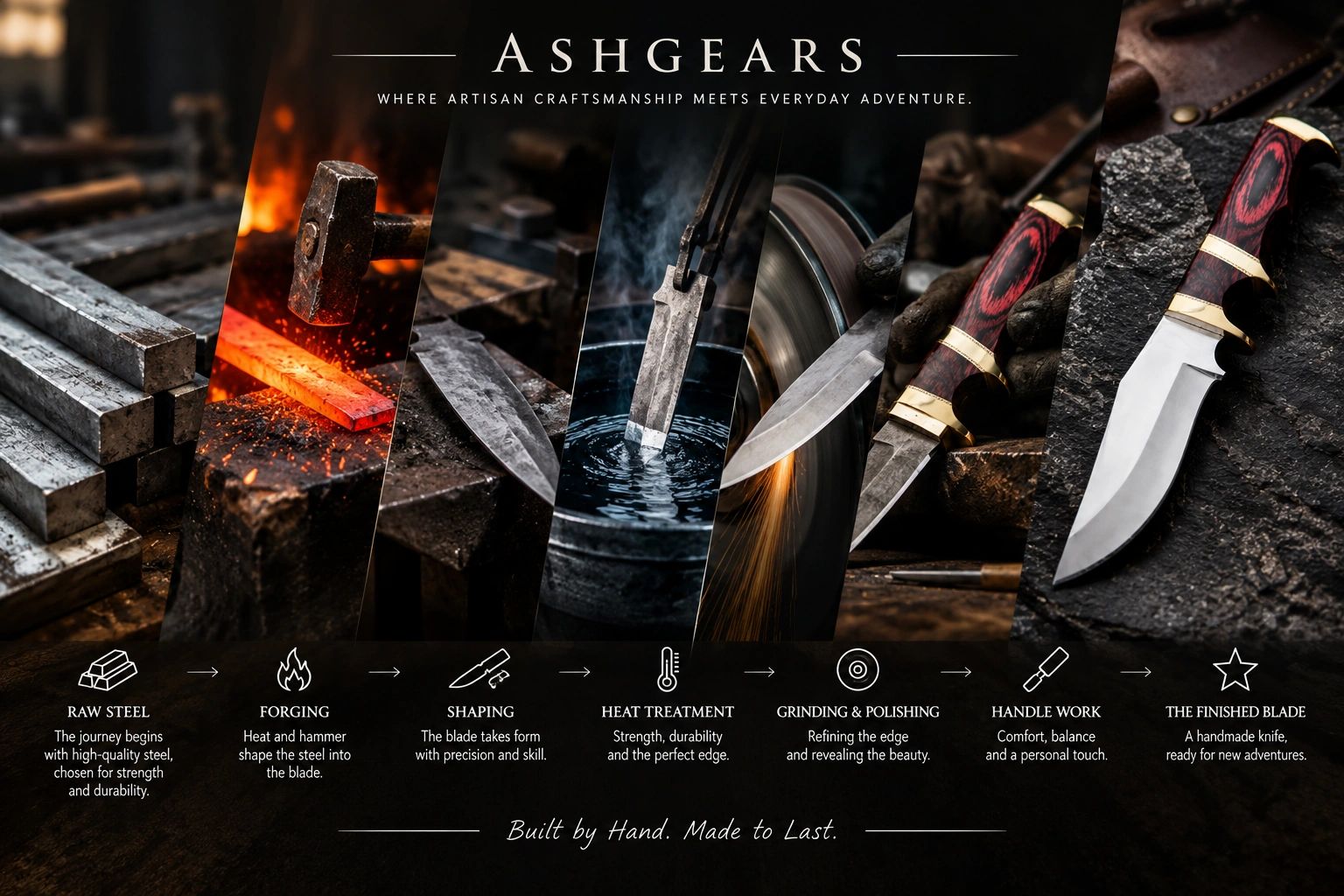
A handmade knife is more than a piece of sharpened steel. Behind every finished blade is a process that combines heat, craftsmanship, precision, patience, and attention to detail.
At Ash Gears, every handmade knife begins with a simple piece of steel and gradually takes shape through a series of carefully controlled steps. From forging and shaping the blade to finishing the handle and fitting the sheath, the journey is what gives a handmade knife its individual character.
Let’s take a closer look at how raw steel becomes a finished handmade blade.
1. It All Starts with the Steel
The journey begins with selecting the right steel for the intended knife. The type of steel can influence important characteristics such as hardness, edge retention, strength, and durability.
For handmade knives, choosing suitable steel is an important first step because the final performance of the blade depends not only on its design but also on the material and how it is treated.
At this stage, the steel may look like nothing more than a plain piece of metal. The craftsmanship comes later.
2. Heating the Steel
Once the steel has been selected, it is heated to a high temperature so that it becomes workable. Heat allows the maker to shape the metal into the desired blade form. This is one of the defining parts of traditional knife making because the maker has to work carefully with the heated steel while gradually developing its shape.
The process requires patience and experience. Too little attention at this stage can affect the shape and consistency of the finished blade.
3. Forging and Shaping the Blade
Now the transformation really begins. Through forging, the heated steel is shaped into the basic form of the knife. The maker works on the profile, spine, edge, and overall proportions of the blade. Every strike and adjustment contributes to the final design. Unlike mass-produced knives that follow standardized manufacturing processes, a handmade knife carries the character of the person who made it. Small variations can make each blade feel unique.
4. Grinding Creates the Blade Profile
After the basic shape has been established, the blade is carefully ground and refined. Grinding helps create the bevel and establishes the geometry of the cutting edge. This stage requires precision because the thickness and angles of the blade can influence how it performs. The rough forged piece slowly begins to look like a recognizable knife.
5. Heat Treatment: Building Strength and Hardness
Heat treatment is one of the most important stages in the knife making process. The blade is heated and cooled in a controlled manner to develop the desired properties of the steel. Proper heat treatment can help achieve a useful balance between hardness, toughness, and edge retention.
This stage is a reminder that making a quality handmade knife is not simply about creating an attractive shape. The blade also needs the right characteristics for its intended use.
6. Refining and Finishing the Blade
After heat treatment, the blade goes through additional grinding and finishing. The maker removes unwanted material, refines the bevels, smooths the surface, and brings the blade closer to its final dimensions. Depending on the design, the blade may receive a polished, satin, textured, or patterned finish.
For Damascus steel knives, the finishing process can reveal the distinctive layered pattern within the steel, giving the blade its characteristic appearance.
7. Creating the Handle
A blade is only one part of a handmade knife. The handle needs to provide a comfortable and secure grip while complementing the shape of the blade. Depending on the design, handmade knife handles can be made from materials such as wood and other carefully selected handle materials. The handle is shaped, fitted, and finished by hand. Details such as contours, guards, pins, and surface finishing all contribute to the final appearance and feel of the knife.
8. Sharpening the Edge
Once the blade has been fully shaped and finished, the cutting edge is carefully refined. Sharpening is more than simply making the edge look sharp. The maker has to establish an appropriate edge while maintaining consistency along the blade. This final refinement helps transform the shaped piece of steel into a functional blade.
9. Adding the Finishing Touches
Before a handmade knife is considered finished, it needs to be carefully inspected. The maker checks the blade, handle, fit, finish, and overall appearance. Any small imperfections can be addressed during this stage.
For knives supplied with a leather sheath, the sheath also becomes part of the finished presentation. A properly fitted sheath helps protect the blade during storage and carrying.
10. From Raw Material to Handmade Knife
What began as a simple piece of steel has now become a finished handmade knife.The transformation is not achieved in one step. It is the result of many stages working together material selection, heat, forging, grinding, heat treatment, finishing, handle making, sharpening, and inspection.
That is what makes handmade knives different from ordinary factory-produced products. Each stage reflects the maker's attention to detail and the time invested in creating the finished piece.
Why Choose a Handmade Knife?
One of the biggest attractions of handmade knives is their individuality. A handmade knife can combine traditional craftsmanship with practical design, creating a blade that has its own character rather than looking like one of thousands of identical products.
For collectors, outdoor enthusiasts, hunters, and people who appreciate traditional craftsmanship, the story behind the knife can be just as interesting as the finished product.
The Craft Behind Every Ash Gears Blade
At Ash Gears, we appreciate the process behind handmade blades. A finished knife represents much more than steel, wood, leather, and hardware. It represents a sequence of careful decisions and hands-on craftsmanship.
From raw steel to finished blade, every stage contributes to the final result. The next time you hold a handmade knife, remember that its journey started long before the finished blade reached your hands. Explore handmade knives and handcrafted blades from Ash Gears and discover the craftsmanship behind every piece.

