


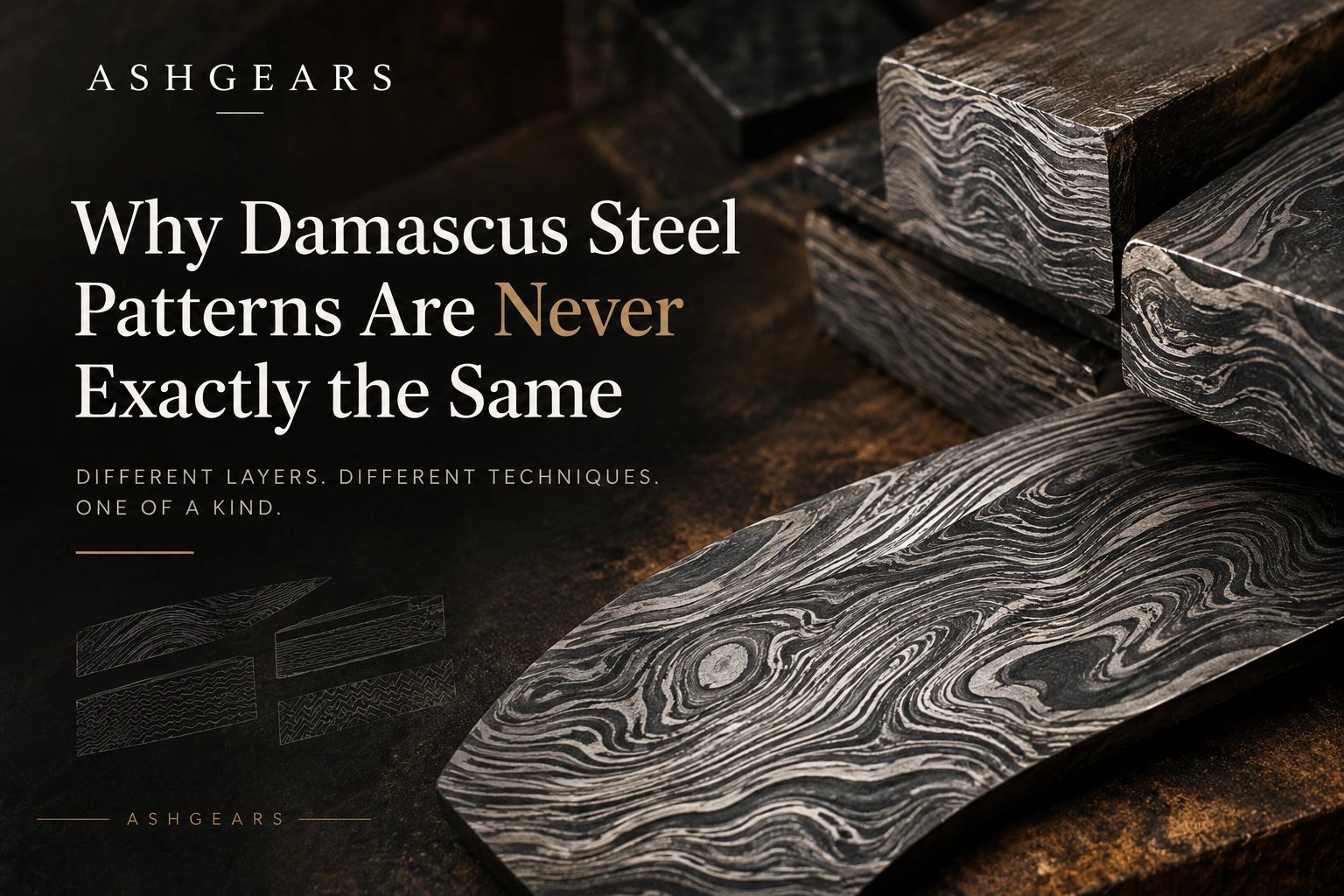
Damascus steel knives are admired for their striking patterns, handcrafted appearance, and the skill required to create them. From flowing waves to intricate twists and layered designs, every Damascus blade has a distinctive character. One of the most fascinating things about Damascus steel is that its patterns are never exactly the same, making each knife visually unique.
But what makes these patterns different from one blade to another? The answer lies in the steel itself, the forging process, and the craftsmanship behind every handmade knife.
What Is Damascus Steel?
Damascus steel is known for its distinctive surface patterns, created by forge-welding different layers of steel and manipulating them during the manufacturing process.
Modern pattern-welded Damascus steel is commonly made by combining steels with different compositions, which respond differently to polishing and chemical etching.
At AshGears, Damascus steel knives are crafted using 15N20 and 1095 high-carbon steel. These steels contribute to the blade's layered appearance, with nickel in the 15N20 helping create the bright contrast against the darker etched steel. The result is a visually appealing blade that combines traditional techniques with distinctive patterns and practical functionality.
1. Every Forging Process Creates Differences
The first reason Damascus steel patterns vary is the forging process itself. During forging, layers of steel are heated, forge-welded, folded or manipulated, and shaped into a blade. Small differences in how the steel is worked can influence the final pattern. The number and arrangement of layers, the direction of twisting, and the way the billet is manipulated all affect the design that eventually appears on the blade.
Even when a bladesmith follows a similar process for two knives, slight variations can produce noticeably different results.
2. The Arrangement of Steel Layers Matters
The distinctive appearance of Damascus steel comes from the arrangement of its layers. These layers form the foundation of the pattern, and changing their orientation can produce different designs. Depending on the technique used, a blade may feature flowing waves, circular shapes, twisted lines, or more complex geometric patterns.
For example, twisting a steel billet can create spiral-like designs, while other methods can produce waves or repeated shapes. The final appearance depends on how the layers are arranged and manipulated before the blade is finished. This is why two Damascus knives made from the same types of steel can still look completely different.
3. Heat, Pressure, and Hammering Influence the Pattern
Temperature, pressure, and hammering are important parts of Damascus steel production. The steels must be heated and forge-welded under suitable conditions to create a solid billet. The way the billet is compressed, stretched, twisted, and shaped affects how the layers appear in the finished blade. Differences in these steps can influence the spacing, flow, and symmetry of the pattern.
The experience of the bladesmith also plays an important role. Understanding how steel responds during forging helps the craftsperson create a desired design while maintaining the integrity of the material.
4. Grinding and Etching Reveal the Hidden Design
A Damascus blade does not always show its final pattern immediately after forging. Grinding and polishing prepare the surface, while chemical etching reveals the contrast between the different steel layers. Because 15N20 contains nickel, it generally remains brighter after etching, while 1095 develops a darker appearance. This contrast makes the layered design visible.
The depth of grinding, surface preparation, polishing, and etching conditions can affect how clearly the pattern appears. A similar forged billet may therefore look different depending on how its surface is finished.The pattern is not simply painted onto the blade. It comes from the layered steel itself and becomes visible through the finishing process.
5. Handmade Damascus Knives Have Individual Character
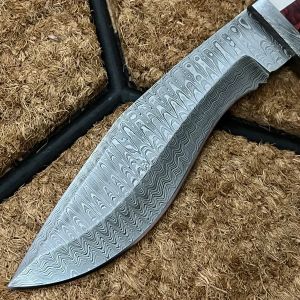
Handcrafted knives often display subtle variations that distinguish one piece from another. Differences in the billet, blade shape, grinding, and finishing can give each knife its own visual identity.
This is especially appealing to collectors and knife enthusiasts who appreciate the details of traditional craftsmanship.
Instead of looking like identical products from a production line, handmade Damascus knives can showcase the individual results of the maker's process.
However, a unique pattern alone does not guarantee superior quality. Steel selection, heat treatment, construction, sharpening, and overall finishing are also important when evaluating a knife.
6. Does a Unique Pattern Mean Better Quality?
Not necessarily. Damascus steel patterns are primarily a visual result of the layered construction and finishing process. A complex pattern does not automatically mean that a blade is stronger, sharper, or more durable than another knife.
The quality of a Damascus knife depends on several factors, including the steels used, the quality of the forge welds, appropriate heat treatment, blade geometry, and workmanship. A well-made Damascus knife combines an attractive pattern with sound construction and performance suited to its intended use.
When choosing a Damascus knife, look beyond its appearance and consider the materials, craftsmanship, design, and care requirements as well.
Why Damascus Steel Patterns Make Every Knife Special
One of the biggest attractions of Damascus steel is the individuality of its patterns. The combination of layered steel, forging techniques, and finishing methods creates a design that can be difficult to reproduce exactly.
For collectors, outdoor enthusiasts, and anyone who appreciates handmade craftsmanship, these variations add to the appeal of owning a Damascus knife. Each pattern tells a visual story of how the steel was worked and finished.
At AshGears, Damascus steel knives reflect an appreciation for traditional craftsmanship and distinctive designs. Whether you prefer flowing waves or intricate layered patterns, exploring different Damascus knives allows you to discover the style that best suits your taste.
Explore the Damascus steel knife collection at AshGears and discover designs that bring together craftsmanship, character, and everyday adventure.
Frequently Asked Questions (FAQs)
1. Why are Damascus steel patterns different on every knife?
Damascus steel patterns vary because of differences in the arrangement of steel layers, forging techniques, billet manipulation, grinding, and etching. These factors influence the final design.
2. What steels are commonly used to make Damascus knives?
Modern pattern-welded Damascus steel can combine different types of steel. AshGears uses 15N20 and 1095 high-carbon steel for its Damascus blades.
3. Are Damascus steel patterns natural or engraved?
Traditional modern Damascus patterns are formed by layering and manipulating different steels. The contrast is revealed through polishing and etching rather than simply engraving or painting a design onto the surface.
4. Does a more complicated Damascus pattern mean a better knife?
No. Pattern complexity is mainly an aesthetic feature. Overall quality depends on the materials, heat treatment, construction, blade geometry, and finishing.
5. Do Damascus steel knives require special care?
Yes. Damascus blades made with high-carbon steels can be susceptible to rust if left wet or exposed to moisture. Clean and dry the blade after use, apply a light protective oil or suitable wax, and store it in a dry place.
6. Can two Damascus knives have similar patterns?
Yes. Knives made using the same pattern-making technique can have similar designs. However, small variations in forging and finishing often make the final patterns different.
Final Thoughts
Damascus steel patterns are more than decorative details. They reflect the arrangement of the steel layers, the techniques used during forging, and the finishing process that reveals the design. Although two knives may share similar materials and methods, their patterns can still differ in subtle and striking ways.
That individuality is part of what makes handmade Damascus knives so appealing. Each blade offers its own visual character while reminding us of the craftsmanship involved in transforming layered steel into a finished knife.

