


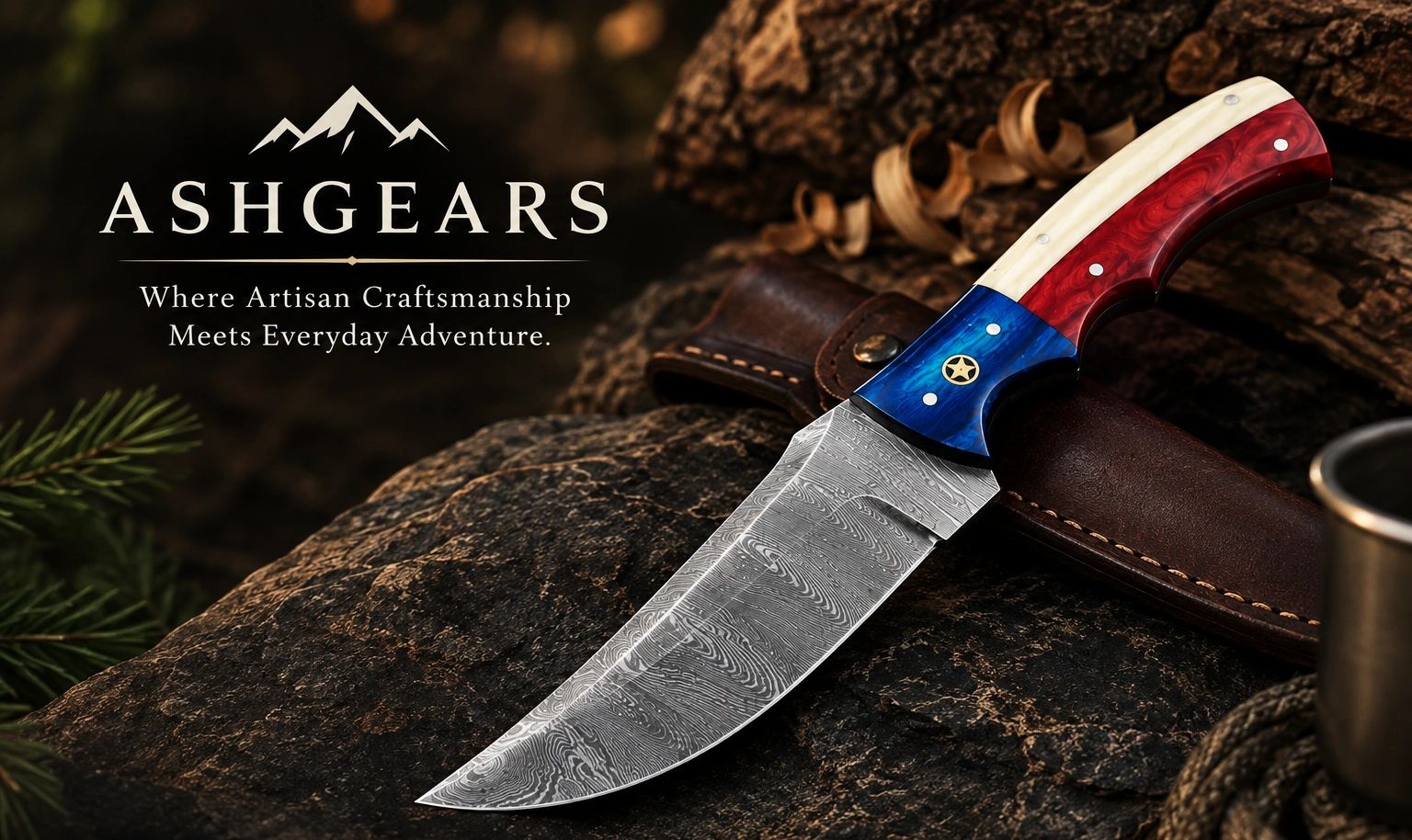
There is something unforgettable about a Damascus steel knife. The flowing patterns across the blade immediately catch your eye, but the real magic goes deeper than its appearance. Behind every pattern is a combination of craftsmanship, carefully selected steels, heat treatment, shaping, and finishing.
For centuries, Damascus steel has fascinated knife enthusiasts, collectors, and craftsmen. Today, handmade Damascus knives continue to stand out because they bring together traditional craftsmanship and practical performance in one distinctive blade.
So, what makes Damascus steel so special?
What Is Damascus Steel?
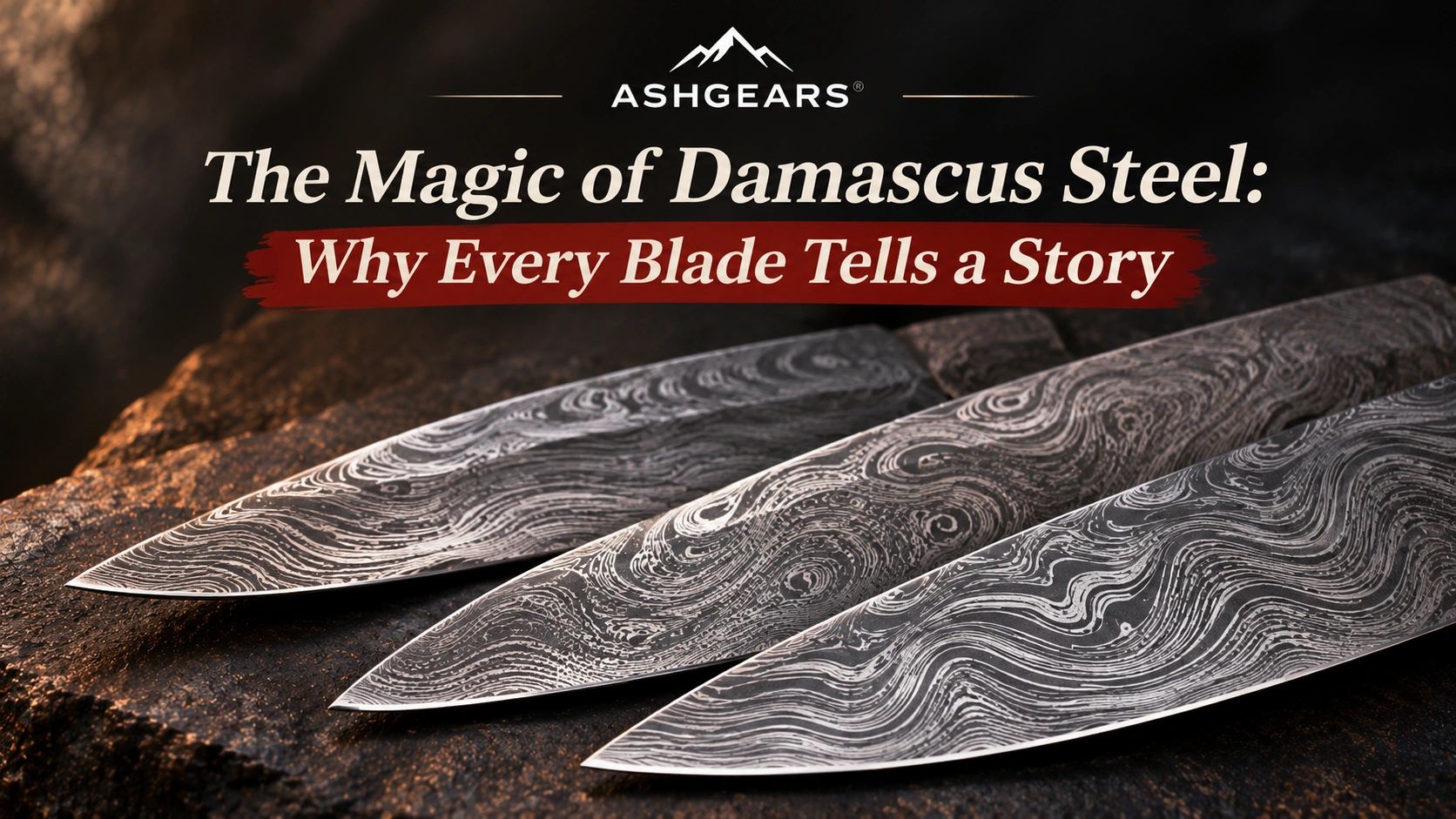
Modern Damascus steel is made by forge-welding different types of steel together and repeatedly folding, shaping, and manipulating the material. After the blade is forged and finished, an etching process reveals the contrasting layers, creating the characteristic waves, lines, and patterns associated with Damascus steel.
At AshGears, our Damascus steel is made by pairing 15N20 and 1095 high-carbon steel. The 15N20 contributes the bright layers because its nickel content resists the ferric- chloride etching process, while the 1095 contributes the darker layers. The result is the striking contrast that makes each blade visually unique.
Why Does Damascus Steel Have Those Beautiful Patterns?
The famous Damascus pattern isn't simply decoration. It is created by the way the different steels are forged and combined. As the billet is worked, the layers can be manipulated into different designs. Once the finished blade is etched, the contrasting steels become visible. This is why no two handmade Damascus blades need to look exactly alike. Small differences in forging, grinding, and finishing can give each blade its own character.
That means when you hold a Damascus knife, you're not just looking at a pattern you are looking at the result of a long series of skilled processes.
Is Damascus Steel Strong?
One of the biggest attractions of Damascus steel is that it combines different characteristics of its component steels. The performance of a Damascus blade depends on several factors, including the steels used, heat treatment, forging quality, edge geometry, and finishing. A beautiful pattern alone does not determine whether a knife is a good performer.
Quality handmade Damascus knives are carefully crafted with both appearance and function in mind. Depending on the design, a Damascus knife can be suitable for activities such as hunting, camping, bushcraft, outdoor work, collecting, or everyday cutting tasks.
At AshGears, our Damascus blades are generally hardened to approximately 55–58 HRC, balancing hardness with practical durability.
Handmade Craftsmanship Makes the Difference
A major part of the appeal of Damascus steel is the craftsmanship behind it. Unlike a mass-produced blade that can be manufactured to identical specifications in large quantities, a handmade Damascus knife passes through numerous stages of individual workmanship. Forging, shaping, grinding, polishing, etching, handle fitting, and sheath finishing all contribute to the final piece. The handle can add another layer of personality. Materials such as densified wood, camel bone, walnut, epoxy resin, and other natural or crafted materials can create a completely different look and feel.
Even the sheath matters. A hand-stitched cowhide leather sheath with a belt loop can complement the knife while making it easier to carry and protect.
Why Do Knife Enthusiasts Love Damascus Knives?
The appeal of Damascus steel comes from more than one feature.
1. Every Blade Has Character
The layered pattern gives Damascus knives a distinctive appearance. The pattern can become part of the identity of the knife itself.
2. Traditional Craftsmanship
Damascus knives are closely associated with forging and traditional blade-making techniques. For many enthusiasts, owning one is a way to appreciate the craft behind knife making.
3. Practical Outdoor Use
A well-made Damascus knife can be a useful companion for outdoor activities such as camping, hunting, and bushcraft, depending on the blade's design.
4. Collectible Appeal
Because handmade blades can have individual patterns, handles, and finishes, Damascus knives are also popular among collectors who appreciate unique craftsmanship.
5. A Story in Every Pattern
Perhaps the most interesting part is that the blade doesn't look completely manufactured or ordinary. Its pattern gives it personality.
How to Care for a Damascus Steel Knife
Damascus steel deserves proper care, especially when it contains high-carbon steel. High-carbon Damascus blades can develop rust or discoloration if they are left wet, exposed to moisture, or stored without proper care.
A few simple habits can help:
• Keep the blade clean and dry after use.
• Wipe away moisture before storing the knife.
• Apply a light coat of suitable knife oil or protective wax when needed.
• Avoid storing the knife while it is damp.
• Avoid harsh abrasives that can damage the etched pattern.
• Store the knife in a dry environment.
Good care doesn't just protect the blade it helps preserve the distinctive Damascus pattern that makes the knife special.
The Magic Is in the Making
The beauty of Damascus steel isn't created in a single step. It comes from the combination of steel, fire, forging, craftsmanship, heat treatment, grinding, and finishing. That's what makes a handmade Damascus knife so fascinating. The blade can be functional, but it can also be a reflection of the craftsman's work.
The next time you see the flowing pattern of a Damascus blade, take a closer look. Those lines are more than an attractive finish. They represent layers of steel, hours of craftsmanship, and a tradition of blade making that continues to inspire knife enthusiasts today.
That's the magic of Damascus steel a blade where craftsmanship and character come together.
Explore Handmade Damascus Knives
Looking for a Damascus knife with its own distinctive character? Explore the handmade collection at AshGears and discover blades crafted for enthusiasts who appreciate traditional workmanship, unique patterns, and practical outdoor designs.
AshGears – Where Artisan Craftsmanship Meets Everyday Adventure.

